

Develop the specialized skills needed to conduct cognitive and learning function assessments.
Cognitive and Learning Function Assessment is now available in a more flexible, two-part structure. We strongly recommend completing both, since Part Two builds directly on the skills established in Part One.
.png)
Course Overview
Build the specialized knowledge and technical skill required to conduct rigorous cognitive and learning function assessments, from foundational theory through to hands-on scoring and interpretation.
The course opens by orienting you to the field: key assessment components, testing functions, and age-related concepts, alongside major theoretical frameworks including the General Factor of Intelligence, IQ, Factor-Analytic Theory, and the Cattell-Horn-Carroll model. You'll examine different assessment lenses, such as evidence-based, qualitative versus quantitative, and idiographic versus nomothetic, and build your understanding of typical versus neurodivergent developmental trajectories and relevant DSM-5-TR diagnostic criteria.
From there, the course moves into intelligence testing in depth: the purpose and psychometric construction of the WAIS, WISC, and WPPSI, and structured guidance toward competent administration, scoring, and interpretation of the WISC-V, including composite scores, FSIQ versus GAI usage, and strengths-and-weaknesses analysis. A dedicated module covers cognitive and supplemental testing, including screening tools such as the MoCA and MMSE-2, adaptive functioning measures like the Vineland and ABAS, performance tests, and the personality, behavioural, and validity measures (including MCMI, MMPI, PAI, BASC, TOMM, and SIMS) that round out a defensible test battery.
The course closes with academic achievement testing, covering the WIAT, KTEA, and WRAT-5, including administration, scoring, and ability-discrepancy analysis. This course is delivered in two parts, and we strongly recommend completing both the self-paced course materials as well as the live Applied Practice sessions to put the skills learned in part one directly into practice.

What You'll Learn
ASYNCHRONOUS COURSEWORK — Approximately 13 Hours (13 CE Credits)
Delivered Through:
-
Lectures (7 hours)
-
Readings (2 hours)
-
Quizzes (2 hours)
-
Handouts (1.5 hours)
-
Survey (0.5 hours)
Times are approximates. Your exact times may vary.
Topics Covered:
-
Orientation to Cognitive and Learning Assessment: Foundational concepts and assessment components; major theoretical frameworks (General Factor of Intelligence, IQ, Factor-Analytic Theory, Cattell-Horn-Carroll); assessment lenses (evidence-based, qualitative vs. quantitative, idiographic vs. nomothetic); typical vs. neurodivergent developmental trajectories and DSM-5-TR criteria.
-
Intelligence Testing: The purpose and construction of the WAIS, WISC, and WPPSI; standardized administration, scoring, and interpretation of the WISC-V, including FSIQ vs. GAI usage and strengths-and-weaknesses analysis; alternative tools (Stanford-Binet, WASI, Leiter-3, Ravens).
-
Cognitive and Supplemental Testing: Screening tools (MoCA, MMSE-2, WMS-IV, Brief Cognitive Status Exam); adaptive functioning measures (Vineland, ABAS); performance testing (TOVA, CPT); personality, behavioral, and validity measures (MCMI, MMPI, PAI, BASC, CBCL, TOMM, PDS, SIMS).
-
Achievement Testing: The WIAT, KTEA, and WRAT-5; administration, scoring, and ability-discrepancy analysis.
How The Course Runs
1
Start with Asynchronous Coursework
Enroll in the Cognitive and Learning Function Assessment course through our learning management system and get immediate access to the self-paced learning. Work through recorded lectures, readings, quizzes, and handouts at your own speed.
2
Live Applied Practice, When You're Ready
Once your asynchronous coursework is complete, register separately for the live online Applied Practice session. These sessions bring participants together for group discussion, live demonstrations of administration technique, hands-on report writing, and test interpretation, guided directly by subject matter experts.
.png)
.png)

This course does not certify or authorize independent clinical assessment and does not replace supervised practice through appropriate professional channels. The skills developed here apply across all clinical contexts, and students are expected to pursue supervised practice through their professional college before conducting assessments independently.
Meet Your Instructors
Asynchronous Coursework: Lauren Appleby, M.A., Registered Psychologist
Lauren is a Registered Psychologist and the Clinical Manager at Kells Psychology, where she is recognized for her expertise in assessment, clinical supervision, and evidence-based therapeutic practice. With over 15 years of clinical experience, Lauren has completed or supervised over 1,500 assessments.

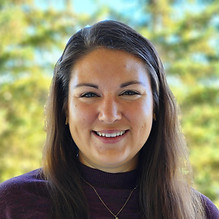
Live Applied Practice: Chantel Wagner, M.C., Psy.A., Registered Psychologist
Chantel obtained her Master of Counselling degree at the University of Lethbridge. She completed her Bachelor of Arts degree in Psychology through the University of Alberta and earned a Graduate Diploma in Psychological Assessment at Concordia University in Edmonton. She is a Registered Psychologist and the Assessment Team Supervisor at Kells Psychology.
Ready to Enroll?
Enroll through our learning management system, or contact us to get started.
(587) 413-0222